

Why Kids Guess Words Instead of Reading
(And How to Fix It)
If your child looks at a word and guesses instead of reading it, you’re not alone.
Many parents notice this:
- Your child sees a picture and guesses the word
- They say a word that “looks right” but isn’t correct
- They avoid sounding out letters
This can feel frustrating. But here’s the important part: Guessing is a common stage in early reading — and it can be fixed.

Why Do Kids Guess Words Instead of Reading?
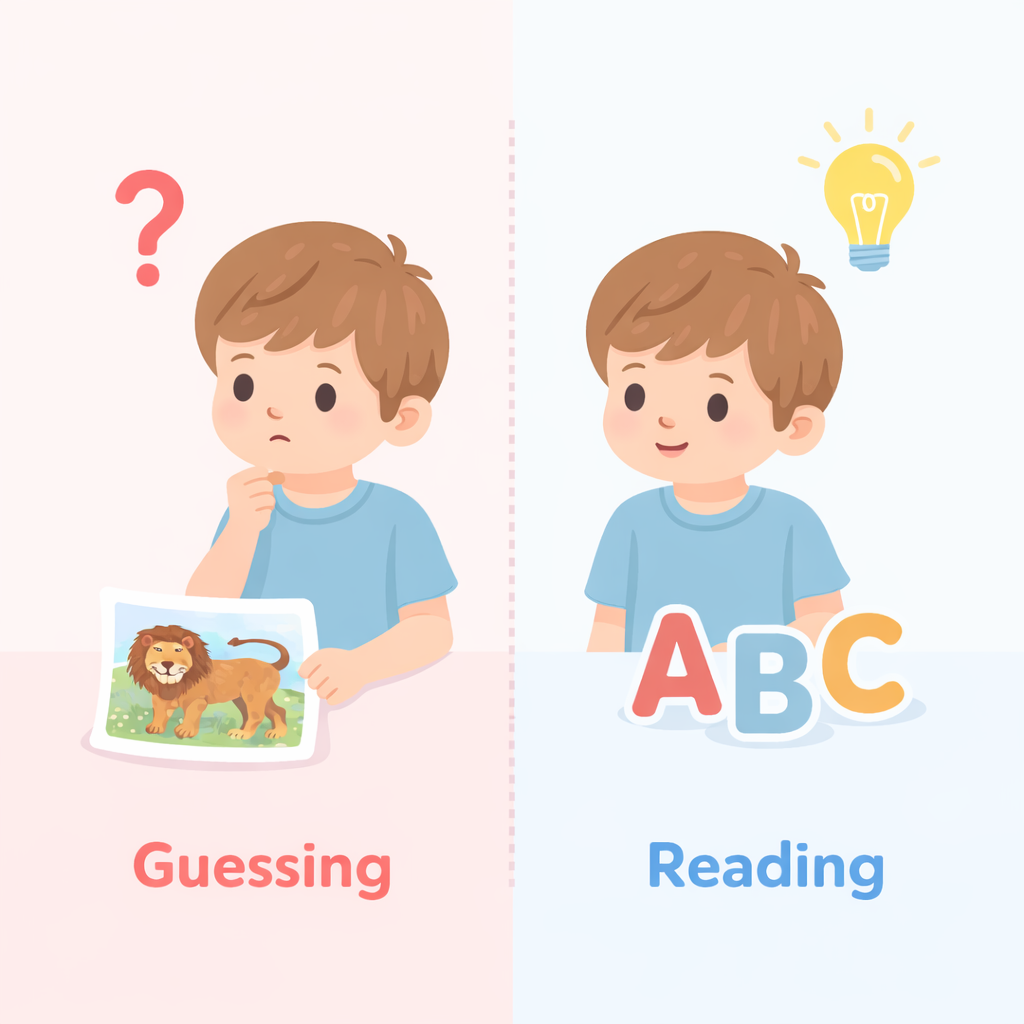
Children guess because they are trying to make reading easier. Instead of decoding, they rely on:
- Pictures
- Memory
- First letter clues
This happens when phonics skills are not strong enough yet.
The Real Problem Behind Guessing
Reading is not guessing.
Reading is:
- 👉 Seeing letters
- 👉 Understanding sounds
- 👉 Blending them into words
When a child skips this process, guessing becomes a habit.
Signs Your Child Is Guessing Instead of Reading
Look for these clear signals that blending needs practice:
- Says a word without looking at all the letters
- Changes words based on pictures
- Skips unfamiliar words entirely
- Avoids sounding out
How to Fix Guessing (Step-by-Step)
Shift Focus to Sounds
Start with simple sound practice. Make sure your child knows sounds clearly.
- c → /k/
- a → /a/
- t → /t/
Slow Down Reading
Encourage your child to go slowly. Instead of guessing: /k/ … /a/ … /t/
Then blend: cat
Speed is not important. Accuracy is.
Cover Pictures Temporarily
Pictures can encourage guessing. Try covering the picture and focus only on the word. This helps the child rely entirely on letters.
Practice Simple Words Only
Use easy words like: cat, dog, sit
Avoid complex words until blending improves.
Encourage Sounding Out
Gently guide your child: “Let’s sound it out together.” Avoid saying the word immediately for them.
What NOT To Do
❌ Don’t Let Guessing Continue: If guessing becomes a habit, it becomes harder to fix later.
❌ Don’t Correct Harshly: Stay calm and supportive. Frustration stops learning.
❌ Don’t Skip Basics: Weak phonics directly leads to guessing.
How Long Does It Take to Fix?
With regular practice:
- Guessing reduces gradually
- Blending improves
- Reading becomes more accurate
Consistency is key.
Build a Strong Reading Foundation
To permanently reduce guessing, focus on letter sounds, blending, and simple reading practice. These skills replace guessing with real reading.
Start With a Simple Guide
If you want a structured approach, a simple guide can help build the right foundation.
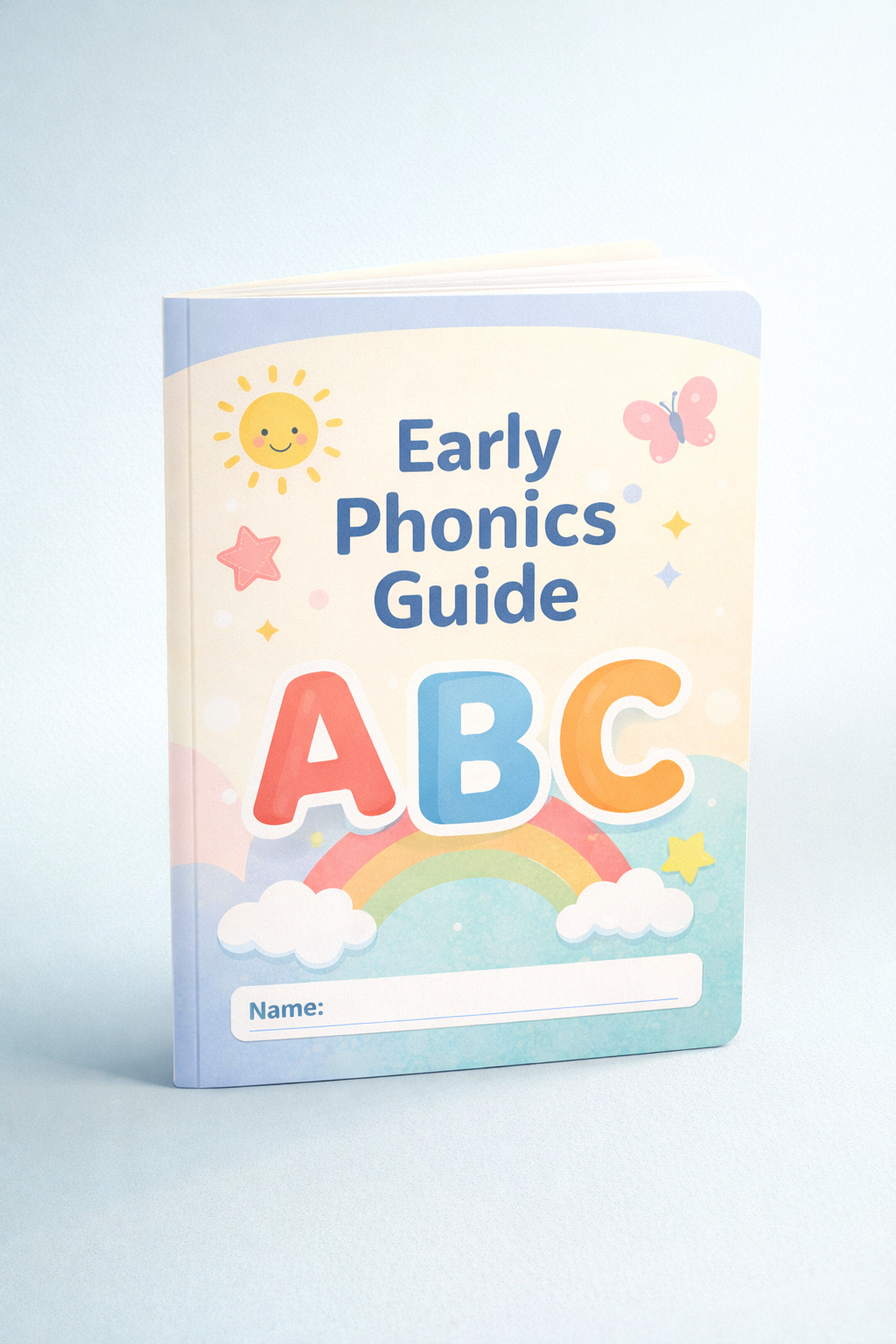
Inside the guide:
- How to teach sounds effectively
- How to practice blending step-by-step
- How to build real reading confidence
Final Thoughts
Guessing is not a bad habit—it’s just a sign that your child needs help with the next step. Focus on slowing down, sounding out, and practicing simple words.
With time, your child will shift from guessing to real reading.