

Your Child Knows Letters… But Still Can’t Read?
Most children who struggle to read are not taught how to blend sounds correctly.
This quick 60-second check will show if that’s what’s holding your child back.
Does your child guess words while reading?
Does your child know letters but still struggle to read words?
Can your child blend sounds like “c-a-t” into “cat”?
Analyzing responses…
Identifying reading roadblocks…
Your Child Is a “Guessing Reader”
What this means: Your child likely recognizes letters, but hasn’t yet learned how to blend sounds into words.
This is very common between ages 3–5. The issue is usually not intelligence — it’s that they haven’t been guided through sound blending the right way.
Download the free 5-minute parent guide to help your child start blending sounds:
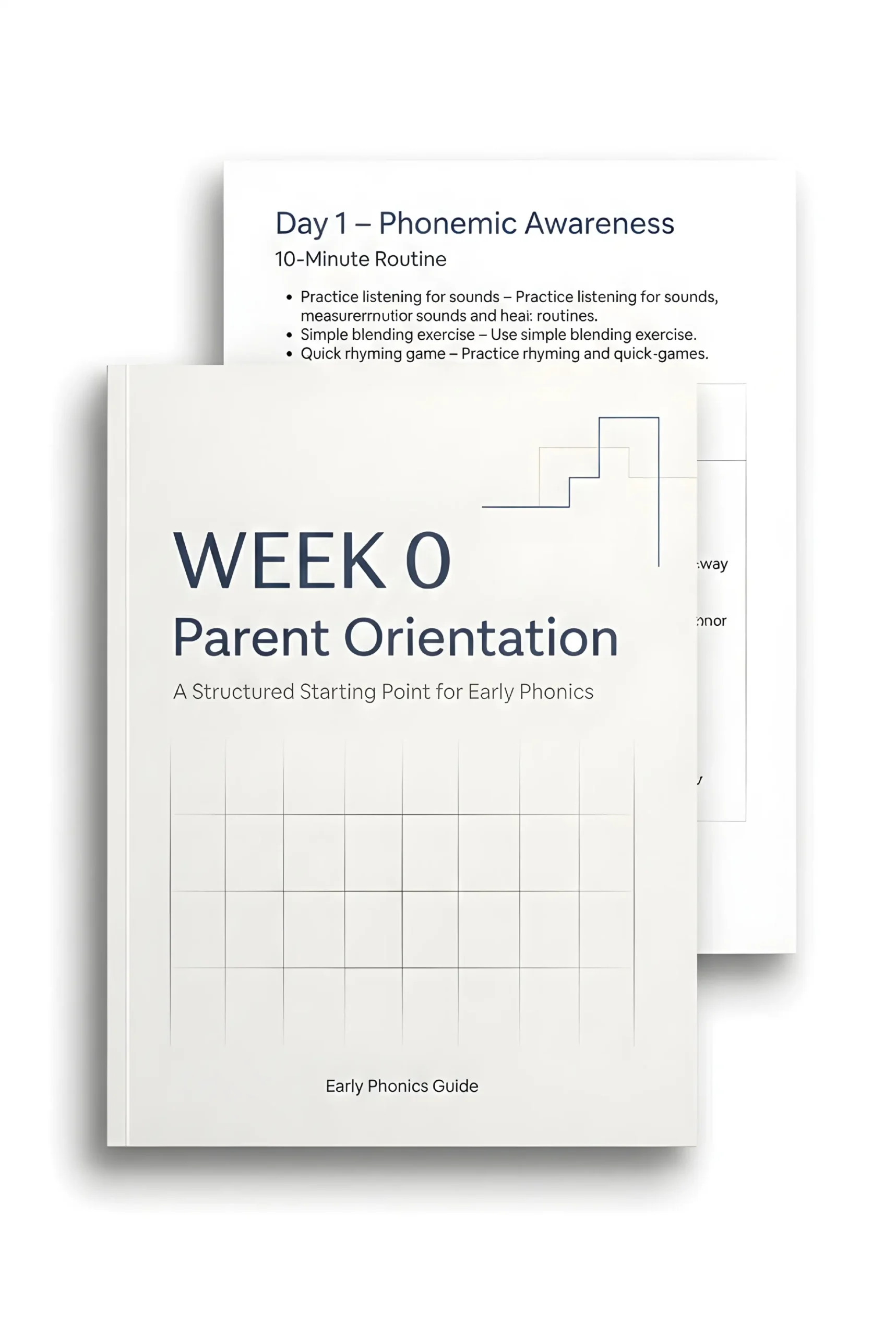
Screen-Free & auditory activities built for preschool attention spans.
Done-for-you step-by-step roadmap designed for parents, not teachers.
Master the foundational logic of reading in under 10 minutes a day.
Finally stop word guessing and build real confidence.

“I didn’t realize my son was just memorizing pictures until I read this. We started the Week 0 steps and blending sounds finally clicked for him.”

“As a busy mom, I loved that this took under 10 minutes. My 4-year-old actually enjoys the screen-free games. It really handles word guessing.”

“Highly recommend. The logic finally made sense to me, and now I know exactly how to guide my child without causing frustration.”