
Child Knows Letters But Can’t Read — What To Do
(A Simple Guide for Parents)
If your child knows their ABCs but still can’t read words, you’re not alone.
Many parents feel confused at this stage:
- “My child can recognize letters… but reading isn’t happening.”
- “We practiced a lot, but it’s not clicking.”
- “Am I doing something wrong?”
The truth is: This is a very common stage in early reading. And the problem is usually not your child — it’s the missing step between letters and reading.
Why Your Child Knows Letters But Can’t Read
Learning letters and learning to read are two different skills.
- 👉 Knowing letters means: recognizing shapes (A, B, C)
- 👉 Reading means: understanding how sounds come together to form words
Most children get stuck because they haven’t learned how to connect sounds.
The Missing Skill: Blending Sounds
This is the most important concept parents often miss. Reading starts when a child can do this:
a → /a/
t → /t/
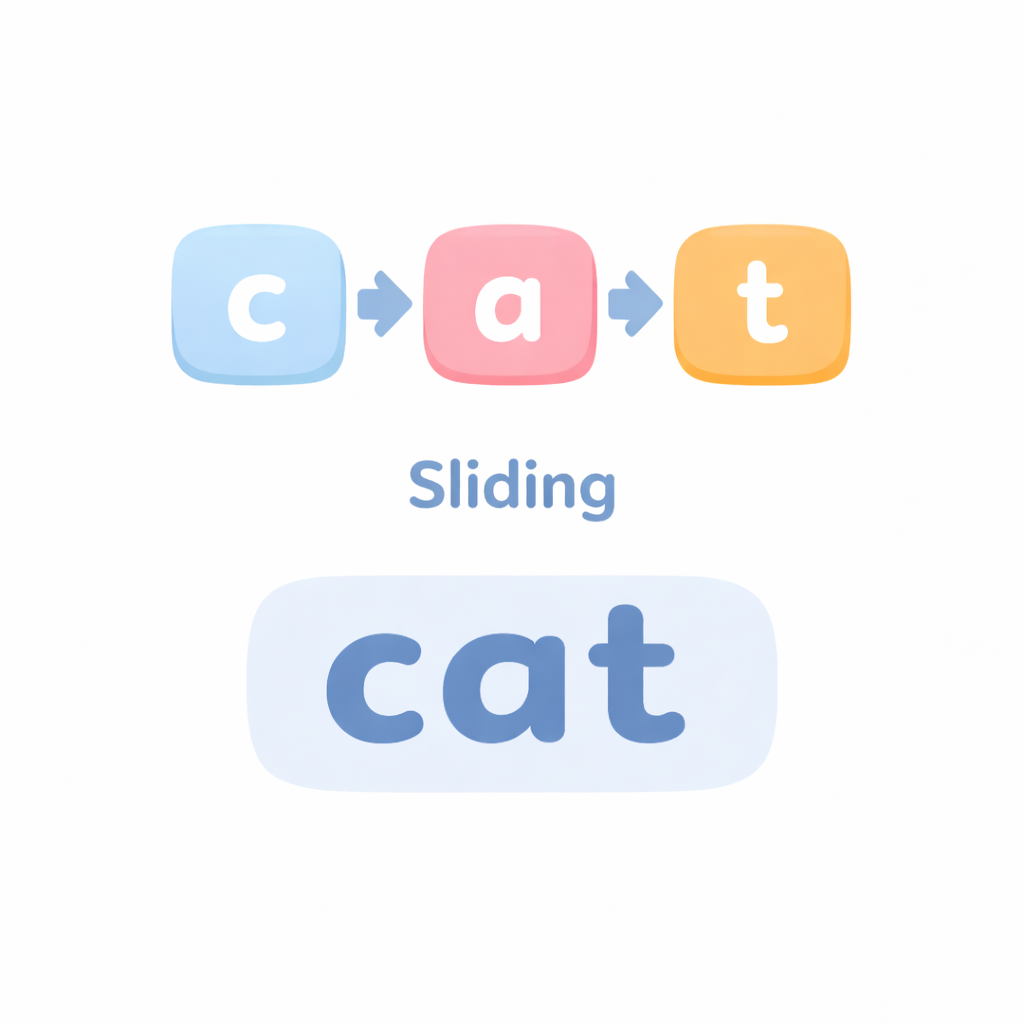
/k/ + /a/ + /t/ → cat
This process is called blending. Without blending, reading doesn’t happen.
What To Do (Step-by-Step)
Now let’s fix the problem.
Focus on Sounds, Not Names
Instead of: “Bee, Cee, Aye”
Teach: /b/ /c/ /a/
Use simple examples:
- m → /m/
- s → /s/
- t → /t/
Start with just a few letters.
Practice Blending Daily
Take 3 letters: c + a + t
Say slowly: /k/ … /a/ … /t/
Then faster: cat
Repeat this daily. This is where reading begins.
Use Simple Words Only
Start with: cat, dog, sit, mat
Avoid long or complex words. Confidence builds from small wins.
Keep Sessions Short
Children learn better in short sessions. Try:
- 10–15 minutes per day
- No pressure
- Calm environment
Consistency matters more than duration.
Common Mistakes Parents Make
Avoid these to speed up progress.
❌ Mistake 1 — Jumping to Books Too Early: If blending isn’t strong, books become frustrating.
❌ Mistake 2 — Memorizing Words: Reading is not guessing or remembering. It’s decoding sounds.
❌ Mistake 3 — Teaching Too Many Letters at Once: Keep it simple. 3–5 letters at a time is enough.
❌ Mistake 4 — Getting Frustrated: Children sense pressure. Learning slows down when stress increases.
A Simple Daily Routine
You don’t need a complicated plan. Try this:
⏱️ 5 minutes → Blending practice
⏱️ 5 minutes → Simple words
That’s enough to start progress.
When Will Reading Start to Click?
This varies for every child. But usually:
- After consistent blending practice
- After repetition
- After small successes
Reading starts to feel natural.
Start With a Simple Guide
If you want a clear starting point, a simple structured guide can help.
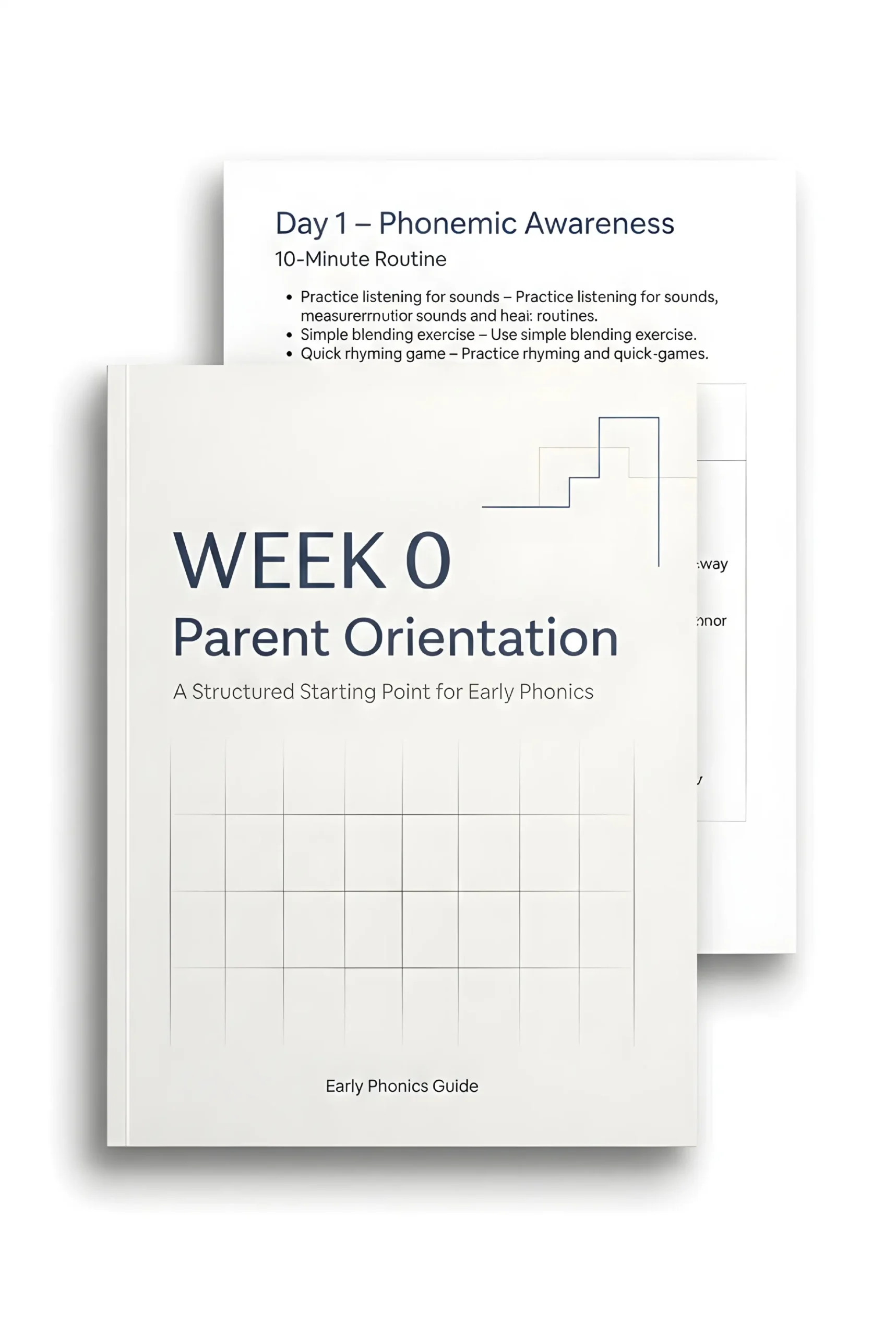
Inside the guide:
- Which sounds to teach first
- How to practice blending
- A simple daily routine
Final Thoughts
If your child knows letters but can’t read yet, don’t worry. This is not a failure. It simply means one step is missing.
Focus on sounds, blending, and simple words. And reading will begin to make sense.